History Repeating
And we've seen it before...and we'll see it agaaaaain...

“The word is about, there’s something evolving.
Whatever may come, the world keeps revolving.
They say ‘The next big thing is here’;
That ‘the revolution’s near’.
But to me, it seems quite clear:
That it’s all just a little bit of history repeating.”
- Shirley Bassey with Propellerheads, History Repeating.
“Watch CNN headline news for one hour. It’s the most depressing thing you’ll ever fuckin’ do: ‘War, famine, death, AIDS, homeless, recession, depression, war, famine, death, AIDS, homeless…’, then you look out your window: <crickets chirping>. Where’s all this shit happening?”
- Bill Hicks, The News.

There’s a big reason I’m loath to discuss current affairs (aside from the glaring reason that much of it is none of my business): it’s because what’s current this second is not going to be current the next, and I have an aversion to treating ephemeral things as though they’re big deals. It’s almost like churning out disposable consumer products off an assembly line just for the sake of calling it “productivity”. Doesn’t interest me.
Actually, it’s not so much that it’s all going to be temporary; everything is. It’s that it’s all doomed to repeat itself. No matter what time in recent recorded history you reference, there’s always someone who gingerly talks about how everything is falling apart and we’re all doomed just before they get up and away from their notepad or laptop and go and book tickets to Jakarta. Oh, yeah. You’re real scared.
Now, I’m not talking about serious appraisals of current affairs that try to be detailed. Those are necessary and useful. I’m talking about these wiseacres that talk as though they’re privy to some secret truth of the universe that someone sent them in a DM in 8chan and we’re all doomed and anyone that doesn’t believe them at their word is a fool. No matter what time in history, and no matter what progress humans have made, an enduring truism is that great numbers of humans, for whatever reason, are apt to declare that we’re in the advent of decadence or the endtimes. Yeah, everyone else was wrong about it, but I guarantee I’m right!
That’s another thing you can set your watch by: myopia. One of the greatest follies of humanity is the ignorance of how ignorant they can tend to be, which, when combined with the trepidation that comes along with assuming one’s status is contingent upon popular opinion, is a catalyst for certitude. And people with certitude don’t even look at restraint in the rear-view mirror.
I’m not a Pollyanna or a hopeless optimist, despite what bitterness-ridden incels in basements with blankets over the windows might believe in between drafts of their long-winded manifestos. I know bad things happen. They always have. Human history is pockmarked with travesty, which is kind of the point: with all the terrible things humans have been through and all the changes and learning that came along with technologically-advanced civilization, how much despair should we bear out in light of current events, and is this antipathy warranted?
Hail To the Precedent
For those contemporary doomsayers, the perennial slam-dunk argument seems to be that “we’re living in unprecedented times”. There’s a lot to unpack there. In a technical sense, every moment is unprecedented simply because - duh - it hasn’t happened yet. But even if you employ plausible rationality (“common sense”) to the sentiment, it still isn’t entirely clear.
One certainty is that technology and syndicated access to it is not precedented. But there’s a bias and exclusion dynamic that comes along with these blithe declarations of precedent. A grossly elongated life expectancy worldwide is also unprecedented, but you’re not hearing a whole lot about that. Same thing with communications standards. Anyone with a smartphone can now go to any country and use their device as an instant communications protocol with people who would have been way up the Tower of Babel before. It almost seems fatuous to attribute decadence and wholesale annihilation to technology when you consider that.
That’s not to even mention the downstream effects. Being able to understand each other and communicate over internet connections has also brought us to an understanding that we have way more in common than we do separately. With as much derision as I may have heaped on video games in the past, online gaming has been one of the single greatest heretofore unsung developments in diplomatic relations in history. You can learn more about some Russian or Korean you play against on Rust than anthropologists can account for.

But if there’s one thing you can count on as sure as people are going to have a solipsistic and myopic concept of history, it’s that you’re going to see the patterns repeating on and on again, if you’re courageous enough to be honest about it. Today’s culture wars aren’t even going to be tomorrow’s recorded history anymore. What is there to learn from? Much of it would disappear if people didn’t talk about it.
I’m not even certain that the only motivation is a wrongheaded yet sincere concern about the Current Affairs Apocalypse. Seriously, I think if you were to take all the editorializing about how decadent we’re getting and we’re living in the worst time ever and doom, gloom, kaboom out of public discourse, the ads in The Atlantic would far exceed anything that passes for journalism. So is it really so untoward to hypothesize that it’s for self-aggrandizement or a desperate bid for professional writers to keep themselves employed in an increasingly noisy din?
* ~ * ~ * ~ * ~ * ~ * ~ * ~ * ~ * ~ * ~ * ~ * ~ * ~ * ~ * ~ * ~ * ~ * ~ * ~ * ~
I’ll be charitable (also read: naïve) and try to digest it at face value, which probably approaches digesting the Elephant Man at face value: maybe they sincerely believe they’re being stewards, warning the public of impending doom. Fine, but if they’re that foolish that they don’t even know their own trade has been doing it since Gutenberg cursed humanity with the printing press, why in God’s name are we letting these people adulterate our discourse anyway?
There’s also an element of dogmatic credulity that any honest, seasoned observer knows is not prudent to bring up in mixed company. Consider William Miller, an 1800s-era Freemason whose revelation of the glory and salvation of the Lord led him to become an ecumenical despondent pessimist, strongly suggesting that he missed a page or two when reading the catechism.

Miller, as any egomaniacal prophet with a heaping dollop of histrionics is wont to do, then amassed a cadre of fawning followers, eagerly queuing up to join him on the glorious (presumably yellow-brick) road to Heaven on the day Miller meticulously calculated the apocalypse, according to his absolutely flawless interpretation of the ancient texts: October 22, 1884 (incidentally, a mere 100 years less 25 days before the advent of my own birth).
As you may have astutely noticed, that date came and went before the invention of child labour laws. By that time, tens of thousands of absolutely-certain disciples would have told you with a straight face and probably some rhapsodic enthusiasm that the end was near. Of course, it was never anything for them to worry about. It’s all the people who marginalized them to textile factories and pauper lives who are going to pay for not repenting.
So what happened after Jesus let everyone down for not keeping his appointment by fiat?
Well, the good news is, tens of thousands of those followers got wise that they’d been had by a charlatan and promptly left (many of whom returned to former churches so they could feel the comfort and rapture of being had by some other talking head in a fancy frock). But among those true believers who would never abandon their Dear Leader like the rest of those milquetoast poseurs, the day became known as The Great Disappointment. I tend to agree. I wouldn’t have been altogether disappointed if all those disciples of Miller had been raptured up and left the rest of us behind on that day. It would save us having to deal with any of their pesky scions and descendants.
But the point of all this is: even in the face of all evidence to the contrary, there’s always a loud contingent of people who will swear up and down that the sky is falling. It’s deeper-seated than fact. People have formed religions and mythologies around it, and it doesn’t stand to reason that simply being in an enlightened age where it would seem objectively counterintuitive to think we’re headed on a crash course for the endtimes could readily yield to such an understanding. People clearly need their fix of pessimistic soothsaying, and thanks to the magic of the information market and the 38-hour-a-day breaking news cycle, they don’t even have to look for it anymore.
Why, why, why, Delilah?
Unfortunately, it seems as though any commentary on the reasons people perennially and surreptitiously clamour for negativity feedback could never be anything more than hypothetical since all the people who would normally carry out longitudinal controlled experiments all seem to have their own rhetorical prejudice, so it’s unlikely anyone’s gonna give you the straight dope. So that’s my disclaimer. You’ve been warned. Generalizations are coming.
@ * @ * @ * @ * @ * @ * @ * @ * @ * @ * @ * @ * @ * @ * @ * @ * @ *
For the record, I don’t subscribe to sentiments of systematic control of the populace. I’ll tell you right now why it’s not happening: because it would be an incredible waste of energy. Those who are exploiting the politics of division and negativity have only found a fitting rotten log to allow their fungus to flourish. A pervasive fallacy about the commons is that they would all be stalwart, upright, highly-cultured, compassionate, empathetic, caring citizens if it weren’t for that rotten government and media-industrial corporate complex keeping them stultified. Maybe it’s my turn to be a pessimist, but that’s comically untrue. It precludes the possibility that anyone could break that mold, and clearly many do.
But again: in spite of that, people run to confirm their biases for a number a different reasons, most of it involving self-interest. As both Freud and Veblen have pointed out, the commons has a seemingly insatiable need to validate themselves through various appeals to status, whether it be by material avarice, or by finding a seductive ideal that they thing gives them a leg-up on all those rotten Libtards who are all probably out wearing keffiyehs and protesting for Palestine instead of living normal lives and working day jobs like they are. No, those people are definitely inferior!
“Be Fruitless, and Divide…”
Which brings me to our own modern, homegrown version of divisive, negative doomspeak: what people colloquially refer to as the political divide. Yet another in a long line of vehicles for common resentment that appears to preclude any need for working on your own flaws and shortcomings. And as always, it’s talked about as though it’s absolutely never happened before.
I’ll be charitable (also read: naïve) and try to digest it at face value, which probably approaches digesting the Elephant Man at face value: they sincerely believe they’re being stewards, warning the public of impending doom by way of charging their neighbours with treason because the election sign on their unkempt lawn is the wrong colour. Fine, but if they’re that foolish that they don’t even know their own trade has been doing it since Gutenberg cursed humanity with the printing press, why in God’s name are we letting these people adulterate our discourse anyway?
You have the same problem with commentary as you do with unions and academia: it’s practically impossible to regulate. In an unregulated market, it’s almost a given that corruption is going to spread wider and faster than a fifteen year-old’s thighs in Matt Gaetz’s rumpus room. And in a perfect example of why the libertarian wet dream of “spontaneous charity” is completely errant, there aren’t even close to enough people to counteract this bum rush.
But guess what? It’s far from new. Dante Alighieri even pointed out the seemingly endless ouroboros of public partisan sentiment away back when he wrote Inferno.

So if it’s the case that we’ve been through this seemingly endless times before, and we’ve survived everything including drawing and quartering, bloodletting, and Roy Cohn in that time, why should I do anything other than laugh or write screeds about this now tedious practice that makes all these overblown auteurs feel like the love child of Camus and Marco Polo? Seriously. I don’t want to sound like a Pollyanna, but if everyone abandoned these shortsighted and ultimately useless forays into rancourous affairs editorials that even they don’t believe and focused on spelunking some of the deeper fundamental truths about humanity, their talents would be put to much better use for posterity of humanity.
After all: isn’t that supposed to be the implied objective? To add some value to the record of letters? Or is the emperor naked and we’re all just supposed to believe he’s wearing the world’s finest silk? Details at eleven.
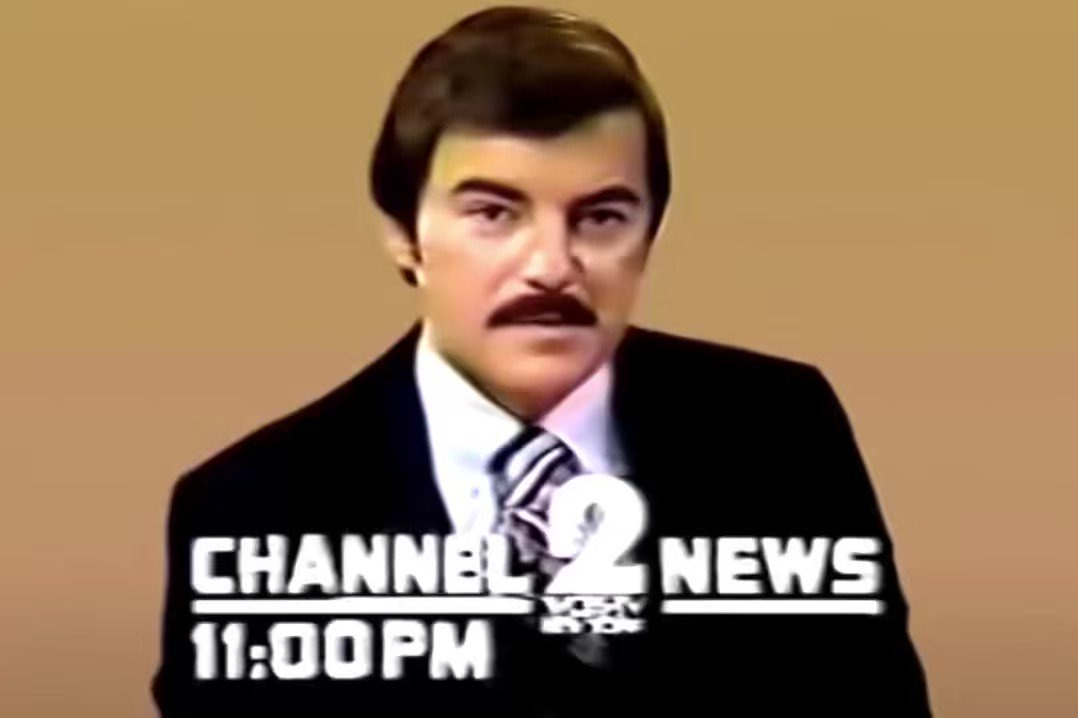
If it isn’t, then why can’t we at least admit that we’re pumping out disposable dreck that won’t mean jack tomorrow? Many of these writers and readers are the selfsame who heap derision upon the commons for their own excesses in consumption. What’s the difference other than the commodity being consumed? Boy, writers sure tend to like to pat themselves on the back for being able to assemble sentence structure and discuss a few ideas. At least the commons are not arrogant about it.
Inconclusively…
Here’s the short answer of why we can’t admit it: it’s antithetical to the real purpose of spinning your wheels in a neverending one-upsmanship against them mindless rednecks who all want women’s rights to go away so they can bring back the good old fifties when men could beat their wives with impunity (but only in moderation, mind you). Simply, validation.
I don’t want to retread where the likes of Maslow and Dąbrowski have before in their piercing analyses of the human condition, but a pithy and reductive way of looking at it is that, pace Socrates, you have a choice to live an examined or unexamined life. An examined life is difficult. It takes a willingness to break yourself down, to become humiliated by an honest appraisal as a mere mortal being in the cosmos, and to make a concentrated effort toward disciplined enlightenment. Can’t imagine why it isn’t catching on like wildfire.
When you’re young, flouting the need to do this kind of thing (because it’s for putzes or whatever) is more or less obfuscated by the endless potential for days-long benders and casual sex culminating in an orgiastic party that doesn’t end until your thirties. Then, the reckoning comes. In the midst of nursing your prodigal-youth hangover, once the fog clears, you realize, you’re not left with anything. You have no philosophy, no fundamentals to call your own. Being shocked with facing that reckoning at that point in your life can be too much to handle.
So what do you do? Take a side. Pick something that makes you feel validated. Even if it’s entirely illusory, no sweat. You just have to substantiate it with endless proselytizing and casting aspersions at perceived enemies to make you feel like you’re paying your alms to the Right Side of History™. And as long as the yen of having to face your own fundamental flaws and tribulations as a human clings to your shadow, you’re going to hold on to your self-righteous bitterness and become a serf to a system that you absolutely believe has a grip on all the other people who “don’t get it”.
As long as humans are grasping at straws, someone will eagerly thrust out the straw. And people will continue with their superficial doomsaying and rhetorical division again and again and again until finally, one of them turns out to be right.
ZeroGrav, in situ (Ian),
04/27/25.
You brilliantly managed to skewer the habit but also the human hunger for fashionable despair. I would only extend your analysis with one more layer: what we see is the industrialisation of repetition, not simply history repeating.
Where once apocalyptic warnings were the domain of a few deranged prophets on a hill, now they are mass-produced and mass-marketed. Fear is instinctual, but it has also become a subscription model. Entire media ecosystems have perfected the monetisation of existential dread, selling us not actual insight, but “catastrophe as content.” We stumble into despair, we have it emailed, streamed, and algorithmically targeted.
It’s no coincidence that the same people shouting about systemic collapse are also the ones meticulously branding themselves as “truth-tellers” with Patreon links. The 19th-century Millerites you invoked at least had the decency to weep at the Great Disappointment; today’s doomsayers pivot to “exclusive commentary for paying members only” before the ashes have even cooled.
Compare today’s climate discourse. No serious person disputes climate change, but watch how narratives have shifted from “here’s what you can do” (a call to action) to “it’s already too late, and you’re doomed unless you follow me.” Hope is now considered gauche. Despair has been professionalised.
In short: history doesn’t just repeat! It gets franchised!
And the most ironic part? True catastrophe usually blindsides civilisations not when everyone is panicking but precisely when everyone is busy performing their panic.